Housing Development

    • Objective 1: By September 30, 2025, generate a comprehensive list of elderly housing in need of repair, with detailed descriptions (see attached).

    • Objective 2: Develop a clear project schedule outlining implementation steps and estimated timelines for completion.

    • Objective 3: After September 29, 2025, meet with County Council members and other key officials to identify zoning, permitting, and regulatory requirements necessary to move the projects forward.

    • Objective 1: Launch housing repair and renovation projects for elderly residents through sponsorships and grant funding.

    • Objective 2: Acquire and renovate vacant houses to provide affordable homeownership opportunities for low-income residents.

    • Objective 3: Select, evaluate, and renovate homes within the project’s housing inventory that can be repaired or updated at minimal cost. Typical repair costs will range from $1 to $30,000, with most requiring less than $10,000. Renovation projects will generally range between $5,000 and $60,000.
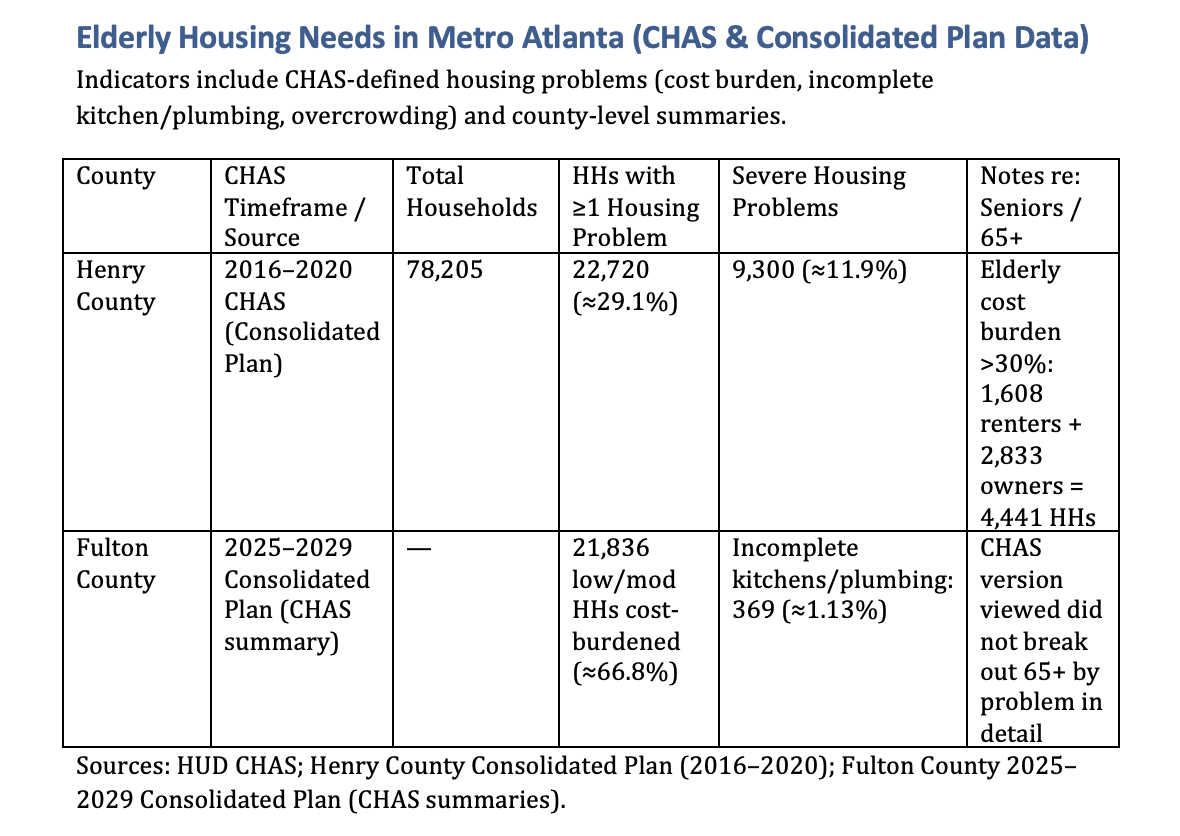
Empirical data shows that housing problems are evident in Metro Atlanta.

Why Is This Important?

Metro Atlanta’s aging population is growing, while the cost of housing and home maintenance continues to rise. These trends place increasing financial and physical strain on older adults—especially those with limited incomes.

Senior Cost Burden

56.7% of Metro Atlanta renters aged 65 and older spend more than 30% of their income on housing costs.

When housing consumes such a large share of income, seniors struggle to afford essentials like food, medication, and transportation.

Annual Maintenance Costs for Older Homeowners

Older adult homeowners in Metro Atlanta spend, on average, $783.90 per year on routine maintenance.

Even “routine” maintenance can be out of reach for low-income seniors, leading to deferred repairs, safety hazards, and declining home conditions over time.

Increasing Population

12.4% of metro residents are 65 or older, a figure that is expected to reach 22.0% by 2050.

As the senior population grows, the need for coordinated, sustainable home repair and support services will only become more urgent.